

Some urban transformations go almost unnoticed. Others, however, are plain for everyone to see — and that is precisely why they become difficult to ignore.
For years, waste collection in New York had a distinctive image: black rubbish bags piled up on pavements, left there for hours before collection trucks arrived. An everyday sight, as familiar as it was increasingly incompatible with the idea of public space in a modern metropolis.
In 2022, something changed. The city authorities launched a structured initiative — dubbed the “Trash Revolution” — with a clear objective: to remove waste from the streets and rethink the entire collection system.
From the street to the system
The change went beyond simply reorganising the service. It transformed the very way waste is managed.
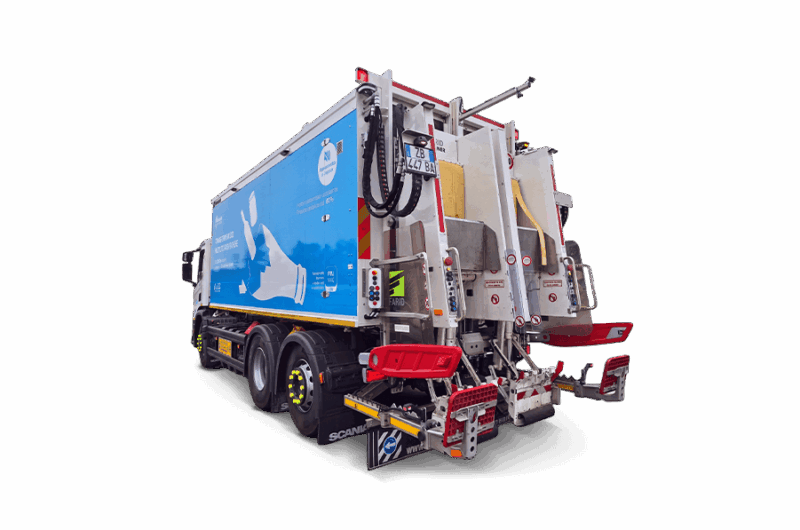
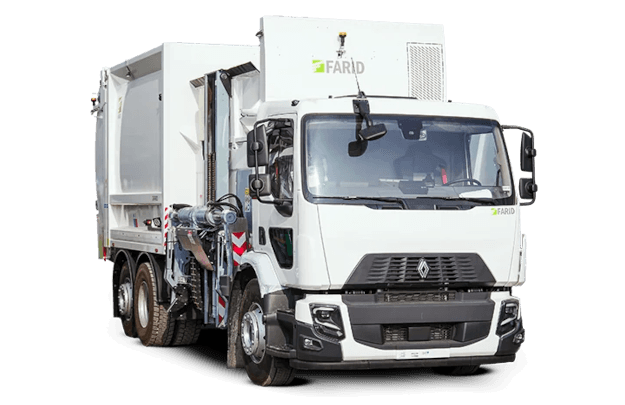
The new model introduces fixed roadside waste containers, so rubbish is no longer left on pavements but placed inside these containers, which are then emptied mechanically by automatic side-loading vehicles — a technology already well established in many European cities
It is no coincidence that New York looked to Europe when planning this transition. The challenge was not to invent a new technology, but to adapt an existing one to an urban environment unique in its density, habits and infrastructure — and to manage everything that a transformation on this scale entails.
A complex transition
Changing a waste collection system in a city like New York is not simply a technical matter.
It means reshaping the waste disposal habits of millions of residents, reorganising collection schedules and rethinking how waste collection crews work. Introducing new vehicles and operating methods requires different skills, specific training and a focus on work organisation that is an integral — rather than secondary — part of any project to modernise the service.
It is this complexity, rather than the technology itself, that determines whether an urban transition succeeds or fails.
West Harlem: the testing ground
The first testing ground was West Harlem, Manhattan.
Here, more than 1,000 roadside waste containers — known as “Empire Bins” — were introduced, integrated into the urban environment and assigned to buildings throughout the neighbourhood. At the same time, operational trials of the new vehicles began.
This is where Farid’s contribution comes in, with the company involved from the earliest stages of the project’s development. Farid proposed a configuration based on its FMO Plus model, adapted to an American Mack chassis and integrated into the local operating network through dealer Gabrielli Truck Sales & Service. A solution born not in a laboratory, but from the ability to understand a specific operating environment and respond with practical solutions.
The pilot phase made it possible to test not only the vehicle but the entire system: interaction with the containers, collection frequencies and the management of urban spaces. The results led to an expansion of the project, with additional vehicles and waste containers.
When the solution is an integrated system
The New York case highlights a key point: waste collection is no longer just about vehicles, but about integrated systems.
Transferring a model from one continent to another requires adaptation: compatibility with local chassis, compliance with regulations, organisation of after-sales support and coordination with container suppliers. It also requires a willingness to address the technical, organisational and social variables that come with each operating environment.
This is where Farid naturally plays its part: not simply as a manufacturer of waste collection equipment, but as part of an ecosystem that ensures the service can continue to operate effectively over time.
A visible transformation
Unlike many infrastructure innovations, this transformation is immediately noticeable.
Fewer trash bags on sidewalks mean better hygiene conditions across the city. A transformation that goes beyond service efficiency, changing both the appearance of the city and the way people experience it.
And one that demonstrates, in very practical terms, how waste management is becoming an integral part of urban planning.