

Glass collection is one of those urban services that seem straightforward. An everyday action, almost automatic. Yet in large cities, behind that simple action lies a complex balance between logistics, material quality and the impact on the urban environment.
In recent years, this balance has shifted. Cities are demanding more efficient, less disruptive services capable of delivering genuinely recyclable material. And glass, more than other waste fractions, makes this transformation particularly evident.
When glass becomes a problem (not just a resource)
In densely populated urban areas such as Milan, glass collection presents specific challenges. It is not just about collecting glass, but how it is collected.
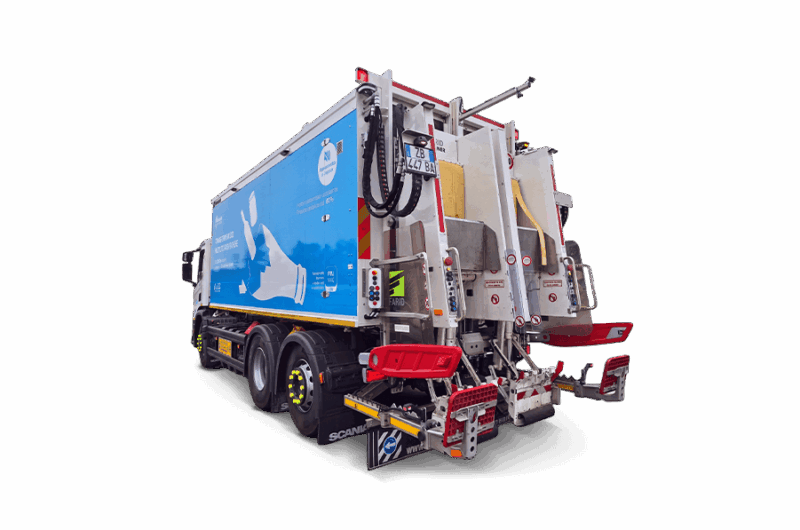
One of the main challenges is crushing. Glass needs to be reduced in volume during collection so that it takes up less. This calls for compaction systems that differ from those traditionally used in refuse compactors collecting other types of waste, as well as fast and safe bin emptying systems space, fewer collection trips are required and subsequent processing is made easier.
That is what Farid offers.
Noise: an increasingly critical factor
There is also a second issue, often underestimated but of particular concern to residents: noise.
Glass collection has traditionally been one of the waste collection activities with the greatest noise impact. In the past, noise levels during bin emptying could exceed 100 dB(A). In a large city, this has a direct impact on residents’ quality of life.
Reducing noise is not just a technical matter. It is essential to ensuring that the service operates effectively, even during the most sensitive times of day, as waste collection often takes place in the early hours of the morning.
Farid has addressed this issue through a carefully defined design approach: sound-absorbing structures integrated into the vehicle’s metal panels. The result is a substantial reduction in noise levels, bringing them below 72 dB(A) during operation. A change that makes a tangible difference during collection hours.
Operational performance: the real test
Efficiency, material quality and low noise levels must go hand in hand. This is where the effectiveness of a solution is truly put to the test.
In more advanced operating environments, new equipment configurations make it possible to collect up to 11 tonnes of glass per shift, while maintaining fast operating cycles and material quality suitable for industrial recycling.
It is not just about the vehicle itself, but about the overall design: how to integrate technology, operations and urban constraints into a system that delivers reliable performance over time.
A real-world example: Milan
This is the context in which the work carried out with Amsa takes place, where evolving operational requirements have led to the introduction of new solutions specifically designed for glass collection.
Farid has contributed by bringing together a combination of expertise: integrating technologies already available within its product range, collaborating with partners specialising in noise and vibration control, and adapting solutions to the specific requirements of the service.
The result is a more balanced system: quieter, more efficient and with a greater focus on the quality of the collected material.
Beyond the individual project
Experiences such as this do more than address a local requirement. They also provide a broader indication of how the industry is evolving.
Glass collection, and municipal waste management more generally, is moving away from a focus on simply handling waste towards an integrated approach to managing quality and environmental impact.
In this context, what makes the difference is not just the product itself, but the ability to understand the operating environment, integrate technologies and support waste collection operators. That is what Farid does, every day.